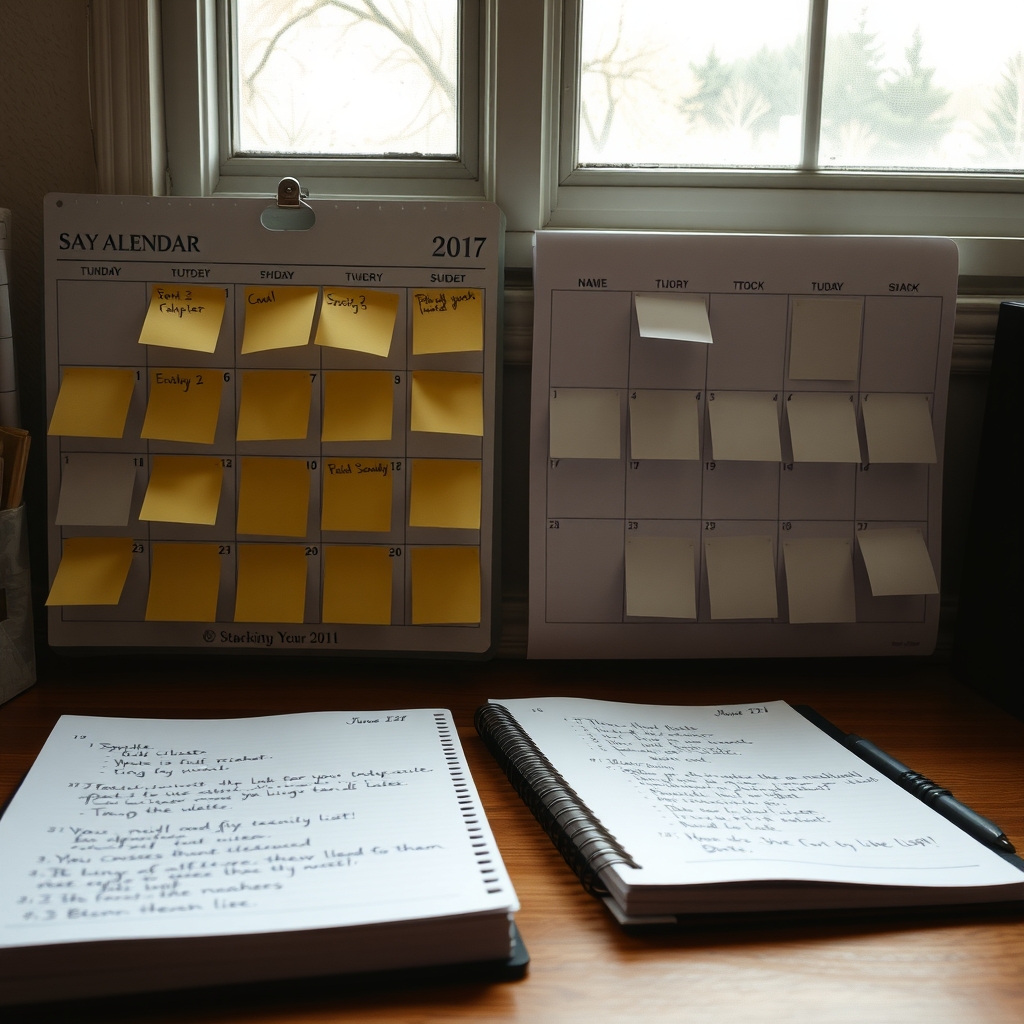
To plan 30 days of short form video, work in one pass: define a single niche angle, list 30 topics that all answer a question your viewer already has, write the opening hook for each one, then place them on a calendar paced to the hours you actually have. The plan fails when people try to invent ideas daily instead of once.
Start with one frame, not thirty ideas
Thirty unrelated ideas is a content dump. Thirty variations on one frame is a channel. The difference is whether a viewer who liked video four can guess what video five is about.
Pick a frame by answering three questions:
- Who is watching? Not "everyone interested in fitness". A person with a specific situation, for example a parent fitting in 20 minute workouts after bedtime.
- What do they already search or scroll for? Their own words, not your industry's words.
- What can you show that they cannot easily get elsewhere? Your work, your failures, your process, your receipts.
Write those three answers down and keep them visible. Every topic has to pass them.
Generate 30 topics in one sitting
The reliable way is to run the same frame through several angles. Ten angles, three topics each, is 30 topics in about an hour.
| Angle | What it produces | Example for a home baker |
|---|---|---|
| Common mistake | Something the viewer is doing wrong | Why your butter is too warm to cream |
| Small win | A shortcut that saves time | The 5 minute Swiss meringue order of operations |
| Comparison | Two options, one verdict | Hand whisk versus stand mixer for one cake |
| Myth | Something widely repeated that is wrong | Cold eggs do not ruin a sponge |
| Before and after | Proof, shown not told | Flat cake to level cake, same recipe |
| Tool | One object, how you use it | What a bench scraper actually does |
| Cost | Money, time, or effort | What a wedding cake costs to make |
| Story | A specific day, told plainly | The order I had to remake twice |
| Question reply | A real question you were asked | Can I freeze the batter |
| Beginner path | First three steps | Start here if you have never baked |
Three per angle and you have a month. Some will be weak, which is fine, because you are choosing 30 from 40 rather than hoping inspiration arrives on a Tuesday.
Write the hook before anything else
The first three seconds decide whether the rest exists for the viewer. So write the opening line for all 30 topics first, and if a topic has no hook that works, cut the topic rather than hoping the video will save it.
A hook does one of four things: names a problem the viewer has, makes a claim they want checked, shows a result they want, or asks the question they are already asking. Anything else is a warm-up.
Two tests for a hook:
- Would you stop scrolling? Read it as if a stranger said it to you in a queue.
- Does it promise something the video delivers? A hook that overpromises buys three seconds and loses the follow.
This is the part that most template-driven planning skips. A free calendar template gives you boxes, not first lines, so the hard part lands on the morning you planned to film.
Playbook takes the other order: you give it your niche, it returns 5 hook scripts free, then the full $27 version builds a 30-day plan, 30 hooks, a bio pack and a trend-jacking guide around your niche and how many hours a week you have. Whether you use it or write your own, the sequence is the same: hooks first.
Pace the calendar to your real week
A 30-day plan that assumes an hour a day is a plan for someone with an hour a day. Count your actual hours first.
Be honest about three numbers:
- How many videos you can film in one session before quality drops.
- How many hours of editing each video needs at your current skill level.
- Which days you cannot film at all because of work, family or travel.
Then build the calendar backwards. If you have four hours a week and each video takes 45 minutes end to end, six videos a week is not a plan, it is a wish. Three videos a week with one rest day is a plan.
A 30-day calendar does not have to mean 30 videos. Fifteen good ones with a clear posting rhythm beat 30 rushed ones, and the difference shows in the first second of every clip.
Batch in three passes
Separating the work stops the stop-start cost of context switching:
- Write. All 30 hooks, then the 5 to 8 lines of body for each. One session, no camera.
- Film. Multiple videos per session, same lighting, same setup. Change one shirt between blocks.
- Edit and caption. Batch these too, because the software and the keyboard are the same.
The gain is not just speed. Filming in one session means your setup is already right, so the videos look consistent, which is what makes a channel feel like a channel.
What should the calendar actually contain?
Each entry needs enough detail that future-you does not have to think:
- The topic, in one line
- The opening hook, written out
- The format (talking to camera, voiceover over b-roll, screen recording)
- The caption starter
- The call to action, if any
If a calendar entry does not have the hook in it, it is a title, not a plan.
Trend-jacking without copying
Leave a couple of slots open each month for whatever is trending in your niche, and adapt the format rather than the content. The distinction matters for more than ethics: platforms penalise unoriginal reposts, and TikTok's community guidelines treat unoriginal content as a distribution problem, not just a moral one.
Adapt means: same structure, your subject. Copy means: same structure, same subject, someone else's footage. The first builds a channel, the second builds a strike.
How do I stay consistent when the month gets busy?
Two mechanisms, both boring:
- Buffer. Bank five finished videos before day one. The weeks you fall behind, the buffer absorbs it.
- Minimum viable week. Decide the floor in advance, for example two posts, and treat anything above it as a bonus. A floor you hit every week beats a ceiling you hit twice.
Also plan rest days on purpose. A plan that admits Tuesday is impossible is more likely to survive than one that pretends every day is equal.
A planning checklist
- One viewer, one frame, written down.
- Ten angles, three topics each.
- A hook written for every topic, and weak topics cut.
- Hours counted, then the calendar built to fit them.
- Rest days marked before the busy days fill in.
- Captions and a call to action on each entry.
- Five videos in the buffer before publishing day one.
The plan is not the hard part once the hooks exist. If you want to see the quality bar before committing an hour to a spreadsheet, the free 5 hook scripts for your niche are the fastest way to check whether the output is specific enough to film.